ROOF INSULATIONS · THE MATERIALS GUIDE
Different types of insulation in South Africa.
A more comfortable building starts with the right material. Compare ceiling rolls, insulated boards, reflective foils and specialist systems before you buy.
Practical guidance for homes, renovations and commercial buildings.
START WITH THE BUILDING
Which insulation belongs
in your project?
The main types of insulation used in South African buildings include glasswool, polyester, rigid foam boards and reflective systems. Acoustic and industrial products add more specialised options. Each solves a different problem, so choosing well means matching the material to the construction.
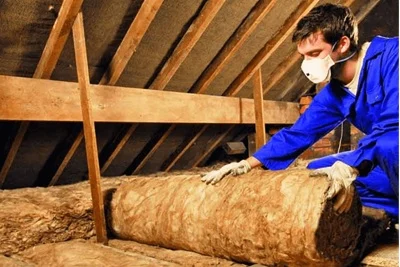
For an accessible ceiling cavity, flexible rolls are often a practical starting point. For an exposed roof, insulated ceiling boards may provide both a finished surface and thermal resistance. A warehouse roof or a noisy partition needs a different approach again.
This guide explains the different types of insulation, with links to the products and detailed advice you need next. Compare the required performance, installation method and total project cost before choosing a brand.
YOUR QUICK COMPARISON
Types of insulation at a glance.
Use this table to shortlist suitable types of insulation. The final choice still depends on the exact product specification and the complete building system.
On a small screen, scroll across the table to see every column.
| Material / application | Common use | Products to explore | What to check |
|---|---|---|---|
| Glasswool / glass mineral wool | Insulation above residential ceilings | Aerolite · Knauf | R-value, roll coverage and thickness |
| Polyester | Flexible ceiling insulation | Isotherm | Supplied grade, density and fire classification |
| Rigid XPS boards | Thermal ceilings and specified building applications | Isoboard · Summit XPS | Board thickness, support and fixing details |
| Reflective foil systems | Radiant heat control within roof assemblies | Sisalation | Air space, orientation and specified membrane |
| Acoustic & cavity products | Framed walls, partitions and ceilings | Acoustic rolls & batts | Tested wall or ceiling construction |
| Faced industrial blankets | Warehouses and commercial metal roofs | Factorylite | Facing, support, compression and roof details |
Glasswool is a type of mineral wool. “Acoustic” and “industrial” describe an application, rather than a single material. Some materials therefore appear in more than one category.
UNDERSTAND THE MATERIALS
From ceiling rolls
to specialist systems.
FLEXIBLE · THERMAL · SOUND ABSORBING
Glasswool insulation
Glasswool consists of fine glass fibres formed into a blanket, roll or batt. Air held within the structure helps slow heat transfer. It is one of the familiar types of insulation fitted above ceilings in South African homes.
Both Aerolite and Knauf Ceiling Roll belong to this broad material family. Their ranges differ in binder technology, available sizes and packaging. Compare the actual product rather than treating “glasswool” and “glass mineral wool” as completely unrelated materials.
Aerolite or Knauf?
Aerolite Soft Touch is available in 50mm, 100mm and 135mm options. Knauf Ceiling Roll uses ECOSE® Technology and is listed in 50mm, 75mm, 100mm and 135mm options. Both ranges offer thermal insulation and sound absorption; check the selected variation for coverage and declared performance.
These types of insulation can be cut to suit irregular roof spaces. They need continuous coverage and enough room to retain their intended thickness. For a closer brand comparison, read Aerolite vs Knauf insulation.

Two rolls can have different coverage even when their thickness is the same.
FLEXIBLE · POLYESTER FIBRES
Polyester insulation
Polyester blankets offer an alternative to glass-fibre products. Isotherm insulation uses recycled PET fibres and is often considered by homeowners who prefer the handling characteristics of polyester.
When comparing these types of insulation, look beyond how soft the material feels. Thickness, supplied density, declared R-value and coverage all affect the decision. Two polyester blankets of the same thickness can have different thermal resistance if their specifications differ.
The Isotherm range listed in our shop includes 50mm, 75mm, 100mm, 135mm and 145mm options. Confirm the grade being supplied and its current technical information. Do not assume that polyester has the same fire classification as an A1 glasswool product.
To compare types of insulation for your ceiling, request a side-by-side quotation. Our Knauf vs Isotherm and Aerolite vs Isotherm guides explain the material differences before you choose.

RIGID BOARDS · INSULATED CEILINGS
XPS thermal ceiling boards
Extruded polystyrene, or XPS, is a rigid foam insulation with a closed-cell structure. Products such as Isoboard ceiling boards and Summit XPS can combine insulation with a visible ceiling finish in an appropriate installation.
These types of insulation are worth exploring for exposed-beam ceilings, garages, renovations and buildings where a conventional ceiling cavity is limited. They serve a different purpose from a flexible blanket laid above an existing plasterboard ceiling.
Compare board thickness, required thermal resistance, available lengths and the fixing system. The commonly listed thicknesses are 30mm, 40mm, 50mm and 80mm, but the correct choice depends on the design. Supports, joints, edge details and permitted exposure need to follow the manufacturer’s instructions.
Moisture resistance does not make a ceiling board a roof-waterproofing system. Fix leaks first. When comparing types of insulation for a new ceiling, include boards, trims, fixings and installation in the budget. Our guide to ceiling options helps you compare the finished appearance too.

REFLECTIVE SURFACES · ROOF ASSEMBLIES
Reflective foil insulation

Reflective systems reduce radiant heat transfer through a suitably positioned reflective surface. Products in the Sisalation and reflective foil range are used within specified roof constructions, often beneath roof coverings.
Unlike bulk types of insulation, a reflective layer depends on the correct air-space arrangement. Its performance cannot be judged by foil thickness alone, and a thin membrane should not automatically replace a specified ceiling blanket.
Some membranes also perform a moisture-control or vapour-control role. That depends on the exact product, joint treatment and roof design. Foil is not a universal cure for condensation or a substitute for repairing roof leaks.
Different types of insulation can work together. A designed roof may use a reflective membrane and bulk insulation, with each layer fulfilling its own role. Explore Sisalation product options and check the specified grade before ordering.
WALLS · PARTITIONS · CEILINGS
Acoustic and cavity insulation
Noise control is a separate design objective from temperature control. Fibrous insulation can absorb sound within a cavity, but a quieter room depends on the whole construction: boards, framing, seals, doors, penetrations and paths around the partition.
For acoustic types of insulation, start with the wall or ceiling system you need to build. A purpose-made acoustic roll or cavity batt may be more appropriate than a general ceiling blanket. Vertical cavities also need a product and fixing arrangement that keep the insulation in position.
Browse our acoustic insulation products for options such as acoustic rolls and cavity batts. Then use the drywall partitioning guide to understand how the insulation fits into the larger construction.
These types of insulation can contribute to thermal comfort as well. However, sound absorption figures are not the same as a wall’s sound-isolation rating. Ask for evidence relating to the intended assembly when privacy or noise separation is a priority.

A complete, well-sealed construction matters as much as the cavity material.
WAREHOUSES · FACTORIES · TECHNICAL APPLICATIONS
Industrial insulation systems
Commercial metal roofs introduce different challenges from a domestic ceiling cavity. Roof spans, exposed finishes, support systems, moisture management and installation access all influence the specification.
Factorylite insulation is a glasswool blanket with facing options for industrial roof applications. Choosing these types of insulation involves more than selecting a thickness: the facing, support method, laps and compression at structural members need consideration.
Technical rolls and batts
Energylite rolls and Energylite batts belong to a technical insulation range with different densities and thicknesses. Selection depends on the intended duty, temperature limits, facing and installation details.
For specialist types of insulation, use the current datasheet for the exact grade. A product suitable for a building roof is not automatically suitable for hot equipment or process pipework. View the industrial insulation range and send us the project specification for a quotation.

OTHER MATERIALS
What about cellulose,
spray foam and stone wool?
Other types of insulation include blown cellulose, spray-applied foams, stone wool, expanded polystyrene (EPS) and rigid polyurethane or polyisocyanurate boards. Their suitability depends on the application and the product’s documented properties.
Cellulose is commonly supplied as loose-fill material installed to a specified density and depth. Spray foam requires careful application, compatibility checks and consideration of future access to the roof. Stone wool is another mineral-wool material, while EPS and XPS are different foam products and should not be treated as identical.
This overview does not imply that we stock every material. If your designer has specified one of these types of insulation, send the full specification so the supply options can be checked.
MAKE A BETTER COMPARISON
Choose for performance.
Then compare the price.
The best types of insulation for your project are the ones that meet the building’s needs and can be installed properly. Work through these four checks.
Required R-value
R-value measures resistance to heat flow. A higher product R-value means greater thermal resistance, but the insulation layer and the complete roof assembly are different things. Read our insulation R-value guide before comparing thicknesses across materials.
Available space
Check the ceiling cavity, access and support arrangement. Flexible blankets need room to retain their thickness. Rigid boards require appropriate fixing details. Keep specified ventilation routes and equipment clearances in the installation plan.
Documented properties
Check thermal data, fire classification and any acoustic or moisture requirements for the actual product. A reaction-to-fire class does not make an entire building fireproof. Density, colour and brand familiarity are not substitutes for the required documentation.
Installation quality
Gaps, displaced material and excessive compression can undermine performance. Repair leaks and assess existing insulation before adding a new layer. Our ceiling insulation installation guide explains the main practical considerations.
BUDGET FOR THE WHOLE JOB
Compare cost per m²,
not just cost per roll.
When pricing types of insulation, start with products that meet the required performance. Then compare their coverage, delivery and installation costs on the same basis.
A lower roll price can be misleading when the roll covers a smaller area. For boards, include the accessories and fitting costs. For an existing roof, allow for access and any preparation identified during inspection.
Use the selected product variation for current pricing. Send your area, location and preferred material when requesting a quotation; VAT, delivery and installation should be clear in the final total.
A SIMPLE QUANTITY CHECK
Example: 90m² ÷ 9m² per roll = 10 rolls before any allowance for cutting or site conditions. Use the coverage of your chosen variation.
CLEAR ANSWERS
Questions about types of insulation.
What are the main types of insulation for a home?
Common choices include glasswool and polyester blankets above ceilings, rigid XPS boards for thermal ceiling systems, and reflective products within specified roof assemblies. The right shortlist depends on whether you are upgrading an existing ceiling, building a new one or insulating another part of the home.
Which types of insulation are best for an existing ceiling?
Aerolite, Knauf and Isotherm are practical products to compare where there is suitable access above the ceiling. Check the required R-value, available space, existing material and installation conditions. Choose the exact thickness and grade around those requirements rather than a universal “best” brand.
Is glasswool different from glass mineral wool?
Glasswool is glass mineral wool; both terms describe the same broad material family. Individual products can still differ in binder, density, thickness, handling and performance. Stone wool is another mineral-wool material, so “mineral wool” alone does not identify the exact product.
Can I combine different types of insulation?
Yes, where the building design allows it. Examples include a reflective roof membrane with bulk insulation or a properly assessed top-up layer over suitable existing material. Check moisture behaviour, ventilation, loading, clearances and compatibility before combining layers.
Does thicker insulation always perform better?
Within the same product range, greater thickness usually provides higher thermal resistance. Across different materials or grades, thickness alone is not a reliable comparison. Check the declared R-value and make sure the installed material is not excessively compressed.
Will ceiling insulation soundproof a room?
Fibrous insulation can help absorb sound, but it does not create a soundproof room on its own. Sound isolation depends on the wall or ceiling layers, seals, framing, openings and flanking paths. Use a suitable acoustic construction when noise separation is the main objective.
Can you help with supply and installation?
Roof Insulations can help compare products and prepare a supply quotation for your location. For installation in Cape Town and surrounding areas, visit Cape Ceilings & Drywalling. Send the ceiling area, property location and details of the existing roof or ceiling.
PRACTICAL ADVICE. A CLEAR QUOTATION.
Let’s find the right
insulation for your building.
Still comparing types of insulation? Send us your measurements, location and project details. We’ll help you narrow the options and quote for the products you need.
Technical reading: Isover Aerolite, Knauf Ceiling Roll, Isoboard properties and Factorylite. Confirm current product documentation for the intended application.
