ROOF INSULATIONS · PRODUCT COMPARISON
Aerolite insulation
vs Isotherm insulation.
Know the difference.
Glasswool or polyester? Compare the specifications, understand the fire classifications and work out the material cost for your ceiling.
Comparing 135mm Aerolite® Soft Touch with the documented 145mm Isotherm polyester grade.
GLASSWOOL INSULATION
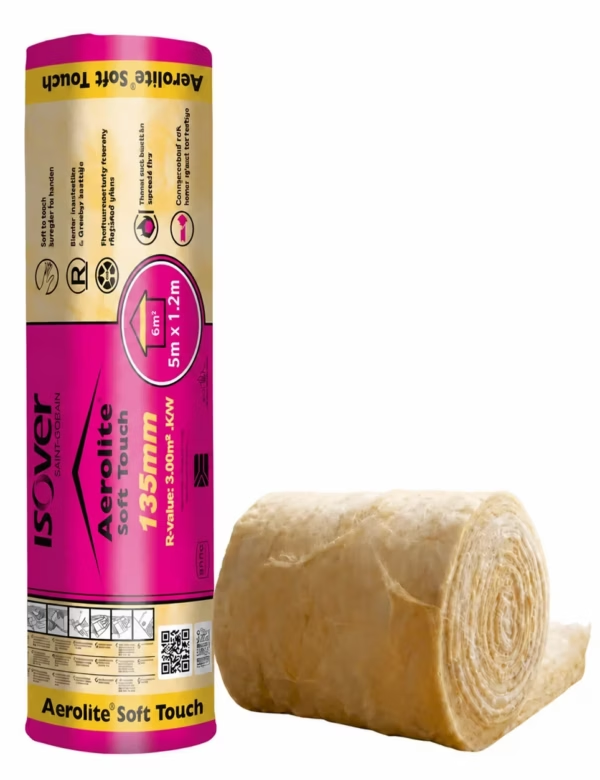
135mm Aerolite
R3.38Published product R-value6 m² per 1.2m-wide roll
RECYCLED PET POLYESTER
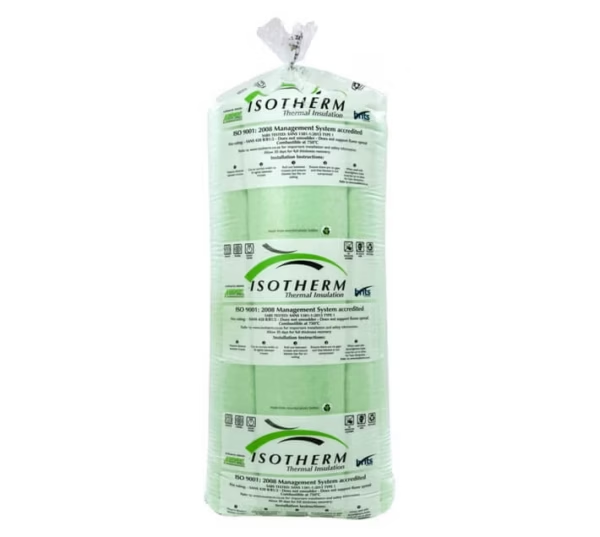
145mm Isotherm
R3.37Published value at 11.5 kg/m³6 m² per 1.2m-wide roll
Illustrative range images; packaging may show another grade or older specification. Check the supplied product. View sources.
THE PRACTICAL VERDICT
Similar thermal figures.
A different material choice.
Aerolite insulation vs Isotherm insulation is a comparison of glasswool and polyester. The selected products have closely matched published R-values, but their reaction-to-fire classifications differ.
Our recommendation: start with Aerolite when a non-combustible insulation material is your priority. Consider Isotherm when you specifically prefer polyester, after confirming the supplied grade and its suitability for your project.
Use this Aerolite insulation vs Isotherm insulation guide to compare the exact products on your quote. Thickness, documented performance and installation requirements deserve as much attention as the price.
THE DETAILS, SIDE BY SIDE
Aerolite insulation vs Isotherm insulation comparison
Figures apply to the stated products and 1.2m-wide rolls. Confirm the declaration for the stock you will receive.
| What you are comparing | 135mm AeroliteSoft Touch ceiling insulation | 145mm IsothermSpecified 11.5 kg/m³ grade |
|---|---|---|
| Insulation material | Glasswool | Polyester made from recycled PET |
| Nominal thickness | 135mm | 145mm |
| Published product R-value | 3.38 m²·K/W | 3.37 m²·K/W At 11.5 kg/m³ in the cited brochure |
| Roll dimensions used here | 5m × 1.2m | 5m × 1.2m |
| Coverage per roll | 6 m² | 6 m² |
| SANS 53501-1 reaction to fire | A1 Non-combustible | B-s1, d1 Different class from A1 |
| Historical SANS 428 entry | A/A1/1 | B/B1/2 H Horizontal-use entry |
| Handling | Flexible glasswool; follow product cutting and handling instructions. | Textile-like polyester; plan cutting and fitting around the framing. |
| Compare material price per m² | Quoted roll price ÷ 6 | Quoted roll price ÷ 6 |
| Confirm on your quotation | Product, thickness, declared R-value and roll coverage. | Product, thickness, density, declared R-value and roll coverage. |
Swipe the table sideways to see both products.
Showing all 10 comparison points.
WHAT THE NUMBERS MEAN
Choose for the whole ceiling
A good Aerolite insulation vs Isotherm insulation decision considers the material, the installation and the supporting documentation together.
Extra thickness is not the whole answer
In this Aerolite insulation vs Isotherm insulation comparison, the thicker polyester product has a published R-value close to the thinner glasswool product. Comparing millimetres alone misses the declared thermal performance.
Check the product description and grade. A differently specified roll may not deliver the figure shown here, even when the brand name looks familiar.
Use the current classification
Fire classification is an important distinction in Aerolite insulation vs Isotherm insulation. The current register lists Aerolite as A1 and Isotherm as B-s1, d1. The older SANS 428 labels are shown separately for reference.
Reaction to fire describes a material’s behaviour. It does not establish a fire-resistance period for your whole ceiling. Confirm the required specification and protection around heat-producing fittings.
Handle it properly. Fit it carefully.
Handling is another consideration in Aerolite insulation vs Isotherm insulation. Glasswool and polyester feel different, and installers may have a preference for cutting and working with either one.
Ask how the selected material will be fitted around framing and obstructions. Follow its handling instructions, keep ventilation routes open and avoid forcing insulation into a space by compressing it.
Ask for the right evidence
For an Aerolite insulation vs Isotherm insulation sound comparison, ask for relevant test data for the complete construction. A sound absorption figure does not directly predict noise transmission through your roof.
Investigate leaks and condensation before installing either product. Material choice does not replace a watertight roof, suitable ventilation or correct moisture-control detailing.
TURN YOUR CEILING AREA INTO A QUANTITY
Aerolite insulation vs Isotherm insulation cost calculator
Both selected rolls cover 6 m². Enter your ceiling area and cutting allowance, then add current roll prices to compare material totals.
Prices are optional. Use VAT-inclusive prices for 135mm Aerolite and the specified 145mm Isotherm. Confirm a suitable cutting allowance for your ceiling layout.
135mm Aerolite
145mm Isotherm
100 m² + 5% allowance = 105 m² to cover. Add both roll prices to compare material totals.
Estimate only. Excludes delivery, installation and accessories. Uses 6 m² rolls for both products and rounds up to whole rolls. Other roll widths or thicknesses need a different calculation.
Complete your Aerolite insulation vs Isotherm insulation price comparison with delivery and installation costs. Confirm the same scope of supply and VAT basis on both quotations.
The quantity estimate is the same because the selected rolls have equal coverage. That does not make their material properties interchangeable. For the example above, 18 rolls purchase 108 m² for a target area of 105 m²; the unused balance comes from rounding to full rolls.
BEFORE YOU ORDER
Three checks for a confident choice
Specify the exact product
Finish your Aerolite insulation vs Isotherm insulation comparison with a clear product description. Record thickness, grade, R-value and coverage; request the supporting datasheet where needed.
Check the existing ceiling
Measure the area being insulated and note difficult access, existing insulation and moisture damage. Agree any preparation with your installer before booking delivery.
Compare the complete job
Separate material, transport and labour costs. Check installation responsibilities and have the required roof performance confirmed for your building before finalising the order.
STRAIGHT ANSWERS
Aerolite insulation vs Isotherm insulation FAQs
Choose from documented specifications and a complete quote. These answers address the differences that matter before you buy.
Which product would you choose?
In Aerolite insulation vs Isotherm insulation, Aerolite is the clearer starting point when non-combustible material is a priority. Isotherm is an option for buyers specifically seeking polyester. Confirm the supplied grade and your building’s requirements before deciding.
Does 145mm Isotherm insulate better than 135mm Aerolite?
Not simply because it is thicker. The selected products have closely matched published R-values. Check the declared performance of the actual roll you are buying, particularly the Isotherm grade, and make sure the installation preserves the intended thickness and coverage.
Does self-extinguishing mean non-combustible?
No. These descriptions are not interchangeable. For Aerolite insulation vs Isotherm insulation, compare the documented reaction-to-fire classes. Aerolite’s A1 classification differs from the Isotherm B-s1, d1 entry in the October 2026 register.
Which product will last longer?
A fixed lifespan ranking needs evidence for the exact products and installation conditions. Keep either material dry and undamaged, and ask for the supplier’s written warranty terms. Avoid basing a purchase on unsupported promises of a particular number of years.
Is recycled polyester automatically the greener choice?
Recycled content is useful information, but it does not establish the environmental impact of the complete installation. Compare product-specific environmental declarations, quantities, transport and expected performance when sustainability is a main requirement.
Can I fit the insulation myself?
Only with safe access and the ability to follow the product instructions. Avoid walking on ceiling boards, protect ventilation paths and follow the required details around lights and flues. Arrange professional help for difficult access or electrical work.
LET’S CHECK YOUR OPTIONS
The right material.
A properly specified quote.
Need help with Aerolite insulation vs Isotherm insulation? Send us your ceiling area, suburb or town and preferred material. We can help you check the available supply options.
Specification sources & comparison notes
- Isover Aerolite® Soft Touch manufacturer product page and technical datasheet (PDF).
- Brits Nonwoven Isotherm manufacturer brochure, hosted by Pelican (PDF). Thermal figures use the documented 11.5 kg/m³ grade.
- TIPSASA SANS 53501-1 reaction-to-fire register, 7 October 2026, Table 1 (PDF).
- TIPSASA dual fire register, October 2024 (PDF). Used only for the historical SANS 428 entries.
- TIPSASA explanation of reaction to fire and fire resistance.
Sources reviewed October 2026. Confirm current documentation for the actual stock quoted. Older brochure climate-zone tables are not used here to establish present-day compliance. No universal energy-saving percentage or acoustic ranking is claimed.