
Conversations carrying through?
Look at the full partition: its cavity insulation, board layers, seals, doors and the routes sound can travel around it.
Explore cavity insulation ↗The acoustic comfort collection
Build quieter spaces with Isover cavity insulation, Knauf Acoustic Rolls, higher-density Energylite and acoustic ceiling tiles. Find the right starting point for your walls, ceilings and noise-control project.
Homes. Offices. Studios. Commercial spaces.
Practical product advice, from the cavity to the ceiling.
 Plan acoustics before closing the wall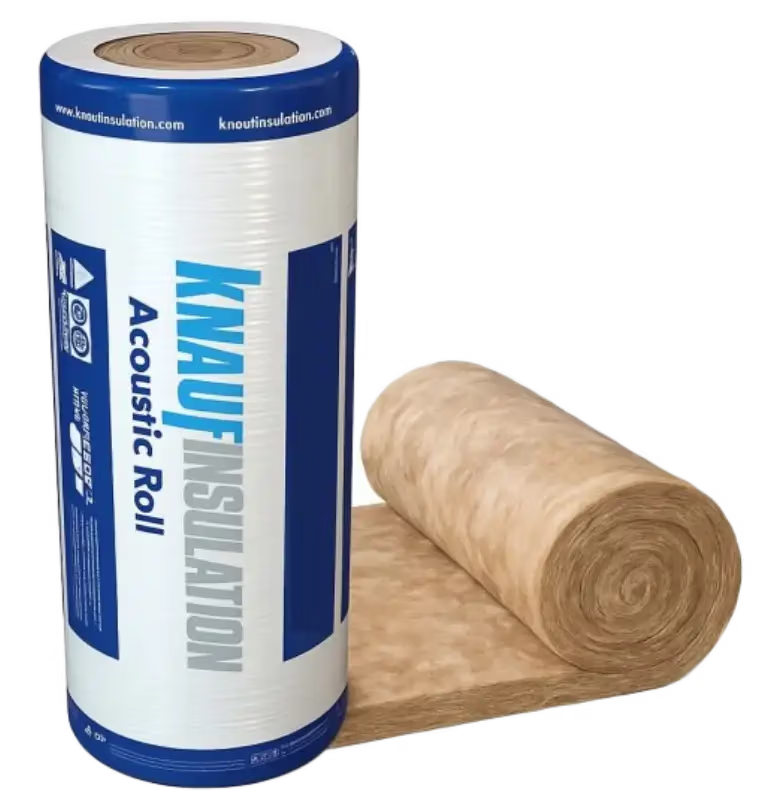
For framed walls and specified cavity systems.
Energylite for more demanding specifications.
Sound absorption for the room below.
Look at the full partition: its cavity insulation, board layers, seals, doors and the routes sound can travel around it.
Explore cavity insulation ↗Sound-absorbing ceiling finishes can help control reverberation in offices, classrooms, meeting rooms and other busy spaces.
Explore acoustic tiles ↗Match the treatment to the noise source. Higher-density insulation can be one component of a designed acoustic solution.
Explore Energylite ↗01 / Inside the wall
Choose batts or rolls to suit the frame, cavity depth and specified wall construction. Ask us to confirm quantities and availability.

Glass-tissue-faced batts for steel or timber framed walls and drywall systems. A practical format for fitting insulation between studs.

The cavity-roll option in Isover’s range. Glass-tissue-faced insulation that can be cut to the required lengths for framed wall construction.
Acoustic rolls for internal walls, partitions and suitable floor systems. Ready-cut widths help with fitting between the specified studs or joists.
Checking a 100mm specification? Isover’s published thicker Cavitybatt and Cavitylite option is 102mm; Knauf Acoustic Roll is 100mm. Confirm the exact product against your cavity and drawing. Dimensions and pack formats should be checked when ordering.
02 / More demanding acoustic applications
For noisy commercial spaces, machine rooms and specified acoustic linings, explore Isover Energylite batts and rolls. The range offers different densities and thicknesses so the material can be matched to the construction and acoustic brief.
25, 40 and 50mm options in the published range.
25, 40 and 50mm options for specified applications.

Density is one selection factor. Thickness, frequency, facing, air space and the surrounding construction also influence performance.
Very noisy areas, bass and vibration may need a combination of absorption, sound isolation and treatment of flanking paths. A denser batt alone does not establish a room’s sound reduction. Share the noise source and any acoustic specification with your enquiry.
03 / A better sound inside the room
A visible ceiling finish can also absorb sound. Compare the selected tile’s acoustic data, finish and grid compatibility before ordering.

ISOVER / VINYL-FACED GLASSWOOL
A glasswool acoustic tile with a decorative Coral vinyl facing. An option to discuss for offices, meeting rooms and other suspended ceilings where the finish and room acoustics both matter.

ISOVER / BLACK GLASS-TISSUE FACE
Black-faced glasswool acoustic tiles for cinema-style spaces and other projects requiring a dark, sound-absorbing ceiling finish. Select them as part of the room’s acoustic design.
Send the brand, product name, tile schedule and required performance. We can check availability for mineral-fibre acoustic tiles and discuss suitable options. A fissured or textured face on its own does not establish sound absorption.
Common grid modules are 600 × 600mm and 1,200 × 600mm. Actual tile dimensions and edge profiles must match the chosen grid. Explore our suspended ceiling guide ↗
The whole construction matters
Cavity insulation absorbs sound within the construction. The performance between rooms also depends on the wall, floor or ceiling around it. Plan these details together before ordering the materials.
For studios, confidential meeting rooms or difficult low-frequency noise, work from an acoustic specification that considers the complete space.
Match thickness to the available cavity and specified assembly. Cut carefully around obstructions and avoid unintended gaps or compression.
Board type, layers, frame arrangement and connections affect sound transmission. Use the lining combination specified for the partition.
Perimeters, sockets, doors and service penetrations can provide sound paths. The detailing needs the same attention as the insulation.
Sound can travel through a shared ceiling void. Where privacy matters, assess the ceiling system, barriers or a partition extending to the structure.
04 / Start with your project
Prepare a clear enquiry with your noise concern, preferred material and project details. If you are unsure about the product or do not have measurements yet, we can help with the next step.
Send the wall section, ceiling schedule or acoustic specification with your WhatsApp message. For replacement tiles, include photos of the face, edge and grid.
Review your message, then send it on WhatsApp.
We’ll confirm the specification, quantities, availability and price with your quotation.

Materials & installation
Roof Insulations supplies the materials. For drywall and suspended ceiling installation in Cape Town and surrounding areas, contact Cape Ceilings & Drywalling.
Share the required construction and acoustic specification so the insulation, linings, ceiling and installation details can be considered together.
05 / Before you buy
The right material depends on what you want to improve and how the room is built. These are the details worth checking.
Ask us about your project ↗Cavitybatt is supplied as pre-cut batts; Cavitylite is the cavity-roll format. Both are Isover glasswool products developed for framed construction and drywall systems. Choose the format around the frame layout, specified thickness and installation method.
Use the thickness specified for the complete wall, floor or ceiling system and check the available cavity. The featured Isover options are 63mm and 102mm; Knauf Acoustic Roll is offered here in 63mm and 100mm. Do not substitute a different thickness purely because the names sound similar.
They are different product ranges with different intended applications and pack sizes. Knauf Acoustic Roll is designed for internal wall and floor applications. Check the product name on the quote and pack; the coverage of a thermal Ceiling Roll is not interchangeable with Acoustic Roll coverage.
Density alone does not determine the result. The thickness, sound frequencies, facing, air space and complete construction all matter. Energylite offers higher-density options for specified applications, but machinery vibration and strong bass can require additional isolation and a project-specific acoustic design.
Sound-absorbing tiles mainly help manage sound reflecting within the room. Privacy between rooms also depends on the ceiling’s attenuation performance, partitions, doors, seals and shared ceiling void. Ask for the appropriate system performance rather than choosing by an absorption rating alone.
No. Different tiles have different absorption and attenuation performance. A textured or fissured finish does not guarantee good sound absorption. Compare the exact product’s technical data, then confirm its edge detail and grid compatibility.
Only where the selected ceiling system permits that product and loading arrangement. Check the tile and grid manufacturer’s requirements for insulation support, services and access. Added insulation should be planned as part of the ceiling construction.
For cavity batts, acoustic rolls and ceiling tiles, send your preferred product, thickness, area and delivery location. For Energylite, open the batts or rolls product page to see current options, then confirm the required specification. Compare quotes using the same VAT basis, quantities, delivery and installation scope.
Let’s find the right starting point
Send us the noise concern and the construction you are working with. We’ll help you confirm the product options and prepare a materials quote.
