
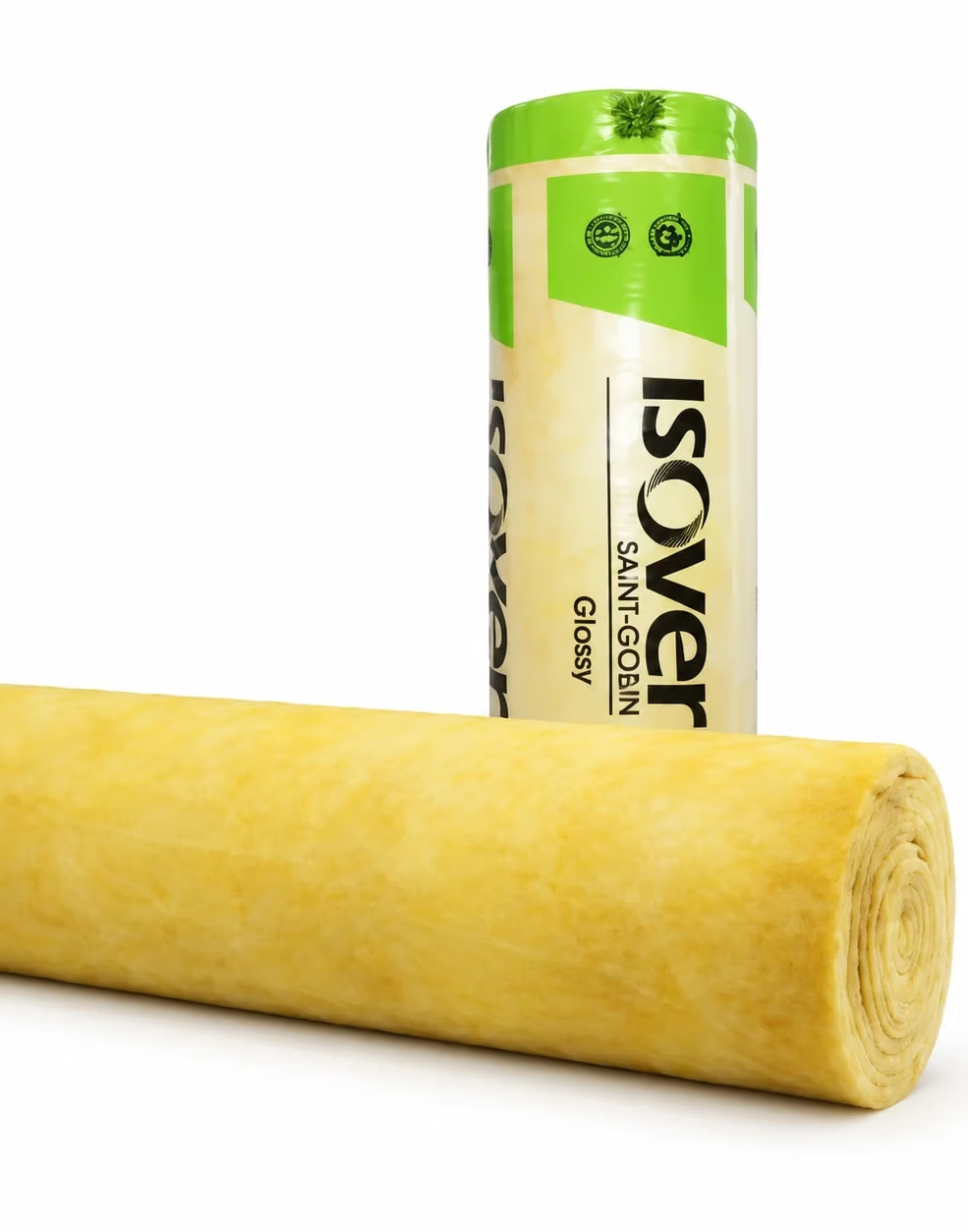


THE RIGHT INSULATION STARTS WITH THE APPLICATION
Energylite insulation.
Built into a better specification.
From a factory plant room to a commercial building, the right choice starts with what you need to control: heat, noise, or both.
Energylite insulation is Isover’s resin-bonded glasswool range for technical applications. This page brings the roll options, density guidance and project questions together, so you can move from a product name on a drawing to a clear quotation.
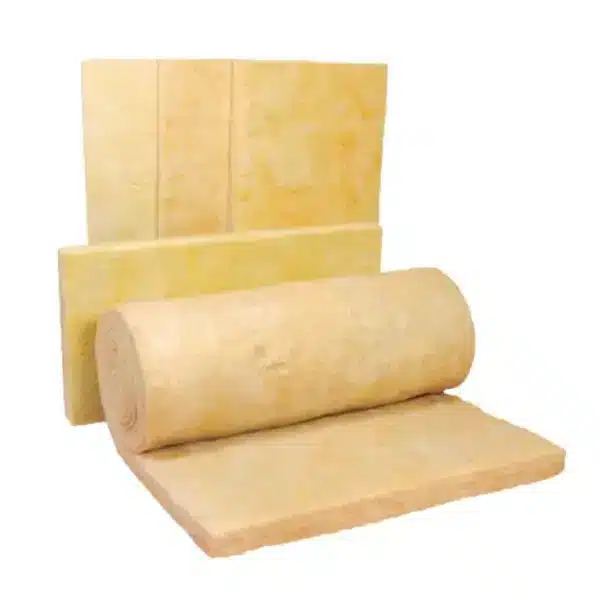
01 / UNDERSTAND THE DENSITY
Energylite insulation densities explained.
Density measures the mass of insulation in a cubic metre. Thickness measures how deep the layer is. They are different parts of the specification: a 50 mm roll can have more than one density.
ROLL OPTION
24 kg/m³
Choose 24 kg/m³ Energylite insulation when this is the grade specified for your project. Match the required thermal resistance, available depth and fixing arrangement before selecting a thickness.
Roll thicknesses 25 · 40 · 50 · 75 mm
ROLL OPTION
47.5 kg/m³
47.5 kg/m³ Energylite insulation is a higher-density roll option for projects that specify this grade. Check the operating conditions and acoustic design rather than choosing it on density alone.
Roll thicknesses 25 · 40 · 50 mm
BATT ENQUIRY
64 kg/m³
64 kg/m³ Energylite insulation is listed by Isover as batts in the standard unfaced range. Send us the batt specification for a separate quote; this is not a selectable roll option above.
Batt thicknesses 25 · 40 · 50 mm
Is a higher density always better?
No. Compare the declared R-value at the required thickness, then check the system requirements. Acoustic performance also depends on frequency, facing, installation and the surrounding construction. Density alone cannot tell you how quiet a finished room will be.
Compare the same thickness: at 50 mm, the listed R-values are 1.39 for 24 kg/m³ and 1.56 for 47.5 kg/m³. The 64 kg/m³ batt also lists 1.56 at 50 mm. Increasing density does not produce a proportional increase in thermal resistance.
Special facing required? Isover also lists 32 kg/m³ Sonic batts within its faced range. Treat this as a separate product enquiry, not a substitute for the roll options on this page.
02 / COMPARE THE ROLL OPTIONS
Energylite insulation roll sizes.
Use the table to plan quantities for the standard unfaced range. Confirm the supplied product, facing and availability on your quotation.
On a small screen, swipe the table to see every column.
| Density kg/m³ |
Thickness | Length × width | Coverage / roll | R-value |
|---|---|---|---|---|
| 24 | 25 mm | 10 × 1.2 m | 12 m² | 0.69 |
| 24 | 40 mm | 8 × 1.2 m | 9.6 m² | 1.11 |
| 24 | 50 mm | 5 × 1.2 m | 6 m² | 1.39 |
| 24 | 75 mm | 3 × 1.2 m | 3.6 m² | 2.08 |
| 47.5 | 25 mm | 10 × 1.2 m | 12 m² | 0.78 |
| 47.5 | 40 mm | 8 × 1.2 m | 9.6 m² | 1.25 |
| 47.5 | 50 mm | 5 × 1.2 m | 6 m² | 1.56 |
Thickness matters.
A higher R-value means greater resistance to heat flow at the stated conditions. Choose the required performance first, then a product that fits the available space. Compressing insulation into a shallower cavity is not a reliable way to retain its stated performance.
Compare the installed specification.
Compare Energylite insulation prices using the same density, thickness, facing and quantity. Then include fixings, protective finishes and delivery. A cheaper roll with less coverage may not be the cheaper option per square metre.
Source: Isover Energylite product table. These are product R-values, not complete wall, roof or process-system ratings.
03 / PLAN YOUR QUANTITY
From square metres
to whole rolls.
Estimate your Energylite insulation quantity from the surface area you need to cover. Add an allowance for cutting and layout, then use the result to start your quote.
For tanks, ducts and curved equipment, use the actual insulated surface area. A building’s floor area is not a substitute for these measurements.
—Enter an area to estimate your rolls
6 m² per roll · standard unfaced range
The 10% allowance is an editable starting point. This estimate does not reserve stock or submit an order.
04 / SOUTH AFRICAN APPLICATIONS
Where is Energylite insulation used in South Africa?
These are examples to discuss with your designer or contractor. Suitability depends on the complete specification, including temperature, exposure, facing and installation.
Factories & process plants
Consider Energylite insulation for heat-loss control around specified tanks, equipment and service areas. In South African manufacturing, send the equipment drawing and operating temperatures with your enquiry so the grade, thickness and protective covering can be checked.
Tell us: equipment type + surface temperature.
Food, beverage & wine production
Enquire about Energylite insulation for service equipment in breweries, wineries, dairies and processing facilities. State cleaning methods, moisture exposure and hygiene requirements. A service-area application does not establish approval for direct food contact.
Tell us: wash-down conditions + required finish.
Commercial buildings & HVAC
Offices, retail centres, hotels and public buildings can have thermal and acoustic requirements around plant rooms and building services. For ductwork, specify internal or external insulation; purpose-designed duct insulation may be the appropriate choice.
Tell us: duct location + facing specification.
Compressor & machine rooms
Discuss acoustic treatment for workshops, engineering facilities and surface plant at mining sites. Describe the noise source, enclosure and ventilation openings. Absorptive insulation is one part of the noise-control design.
Tell us: noise source + proposed construction.
Acoustic walls & ceiling systems
For a specified lining in a school, studio, meeting room or hospitality venue, send the assembly detail. Board layers, framing, seals and openings matter alongside the insulation. The product alone cannot guarantee a room’s sound isolation.
Tell us: assembly detail + acoustic target.
Concrete soffits & raised floors
Ask about batts for the underside of concrete slabs, such as parking areas below occupied space. Isover’s Duo approach uses Energylite batts with insulation pins. Confirm the specified batt, fastening system and finish separately from this roll order.
Tell us: slab area + fixing requirements.
Planning a home ceiling or metal roof?
Send us the roof build-up and your insulation objective. We can help you compare the appropriate ceiling insulation or industrial insulation options before you order.
05 / GET THE DETAILS RIGHT
Temperature, facings and installation.
THERMAL DESIGN
Check the service conditions.
Isover’s detailed datasheet gives a maximum service temperature of 350°C for Energylite 47.5 under 250 Pa, tested to EN 14706. Obtain confirmation for the chosen grade, facing and installation at your actual operating conditions.
Do not treat that figure as approval for every density or for direct-flame furnace lining. Industrial calculations need conductivity data at the relevant temperature; room-condition R-values alone are insufficient.
PRODUCT FORMAT
Unfaced, foil or Sonic tissue?
Faced Energylite is a separate range, including foil and Sonic tissue options. Specify the facing explicitly. A plain roll does not automatically include foil, a vapour-control layer or a finish suitable for exposed airflow.
For air-conditioning ducts, ask whether the design calls for external Ductwrap or an internal lining such as Sonic Liner. Follow that system’s requirements for joints, facing and support.
FIRE & ACOUSTICS
Check the complete assembly.
Isover identifies the unfaced glasswool as non-combustible, tested to SANS 10177 Part 5. This does not establish a fire-resistance rating for a finished wall, ceiling, enclosure or faced system.
Sound absorption and sound isolation are different. For a specified acoustic result, request the relevant system test or design rather than relying on a density number or a promise to “soundproof” the room.
SITE PREPARATION
Protect the finished insulation.
Plan access, fixings, joints and the outer finish before work begins. Identify any weather, impact or moisture exposure. On cold services, have the condensation and vapour-control details checked.
Keep packs dry and under cover. Avoid crushing the insulation during storage or installation. Obtain the manufacturer’s installation and handling instructions for the exact product supplied.
A CLEAR SPECIFICATION. A USEFUL QUOTE.
Send us your project details.
Have a bill of quantities, drawing or product specification? Send it with your delivery town. Tell us whether you need rolls or batts, your required density and thickness, and any facing or temperature requirements.
For Energylite insulation supply enquiries in Cape Town, the Western Cape or elsewhere in South Africa, we will confirm the requested product, availability and delivery arrangements in your quotation.
1
Choose your rollSelect a density and thickness above.
2
Set the quantityUse whole rolls. Check coverage and cutting allowance.
3
Request your quoteClick Add to Quote, then complete your details on the quote page.
06 / BEFORE YOU ORDER
Energylite insulation questions.
Which Energylite insulation density should I buy?
Use the density stated in your specification. If you have no specification, send your application, available depth and performance objective. For equipment, include temperatures and the proposed covering. We can help identify what information is needed before you choose a roll.
Can I order 64 kg/m³ as a roll here?
No. The selector on this page is for 24 and 47.5 kg/m³ rolls. For 64 kg/m³ batts, or a faced product, send a separate enquiry so the format and specification can be confirmed.
How do I get an Energylite insulation price per square metre?
Select the exact roll above to see its live price. Divide that roll price by its coverage in the table, using the same VAT basis when comparing suppliers. Add delivery and any required accessories to compare the full quotation.
Does the calculator include cutting waste?
It starts with a 10% allowance, which you can change. It adds the allowance to your measured area and rounds up to whole rolls. Irregular equipment, multiple layers, joints and offcuts may need a different allowance or a detailed take-off.
Can I substitute Energylite insulation for another product?
Send the original product specification first. Match the required format, thickness, density, thermal performance, facing and system requirements. A product with a similar name or appearance is not automatically an approved substitute.
Can you quote for a large commercial or industrial project?
Yes. Send your quantity schedule, site location, required delivery date and any project-specific documentation. Include separate lines for different densities, thicknesses and facings so that your quotation is easy to check against the specification.

Reviews
There are no reviews yet