
Ceiling insulation is one of the most cost-effective improvements you can make to a home in South Africa. With rising electricity prices and increasingly hot summers and cold winters, properly insulating a ceiling helps regulate indoor temperatures and significantly reduce heating and cooling costs. This comprehensive Ceiling Insulation Prices South Africa will offer detailed product costs.
Many homeowners begin their research with one key question:
“How much does ceiling insulation cost in South Africa?”
The answer depends on several factors, including the type of insulation material, thickness, installation method, and size of the home.
In this guide, we will break down:
Read: Ultimate Guide to Roof Insulation in South Africa
By the end of this guide, you will have a clear understanding of the average ceiling insulation costs in South Africa and how to choose the best option for your home.
The price of ceiling insulation typically ranges depending on the insulation type and thickness.
Below is a general price guide for common ceiling insulation materials used in South Africa.
| Insulation Type | Average Price per m² | Typical Thickness |
|---|---|---|
| Aerolite Insulation | R80 – R140 | 50mm – 135mm |
| Knauf Insulation | R85 – R150 | 63mm – 135mm |
| Isotherm Insulation | R120 – R200 | 100mm – 145mm |
| Factorylite Insulation | R90 – R160 | 50mm – 135mm |
| Summit XPS Ceiling Boards | R250 – R450 | 30mm – 50mm |
| Isoboard Thermal Ceilings | R300 – R500 | 30mm – 50mm |
These prices are supply prices only and do not include installation.
Shop Ceiling Insulation Products
Several factors influence the cost of ceiling insulation in South Africa.
The thicker the insulation, the better the thermal performance.
Typical thicknesses include:
Thicker insulation provides better resistance to heat transfer, meaning homes stay cooler in summer and warmer in winter.
Different materials have different manufacturing costs and thermal properties.
Common insulation materials include:
Examples:
Fibreglass insulation is widely used because it offers excellent thermal performance at an affordable price.
Polyester insulation products like Isotherm are made from recycled plastic fibres and are often marketed as eco-friendly insulation options.
Benefits include:
Rigid ceiling boards provide both insulation and a finished ceiling surface.
Examples include:
These systems are popular in modern homes where insulation and ceiling finish are installed at the same time.
Installation costs vary depending on the roof structure and accessibility.
Typical installation costs range between:
R80 – R180 per square meter
Factors affecting installation costs include:
Older homes may require additional preparation work before insulation can be installed.
Ceiling Insulation Installation Services
The size of the house determines how much insulation material is required.
Typical roof areas:
| House Size | Roof Area |
|---|---|
| Small home | 80 – 120 m² |
| Medium home | 120 – 200 m² |
| Large home | 200 – 350 m² |
Example cost calculation:
If insulation costs R120 per m² and the roof area is 150 m²:
150 × R120 = R18,000 insulation material cost
Add installation at R100 per m²
150 × R100 = R15,000 installation
Total estimated cost = R33,000
Choosing the right insulation product depends on budget, climate, and performance requirements.
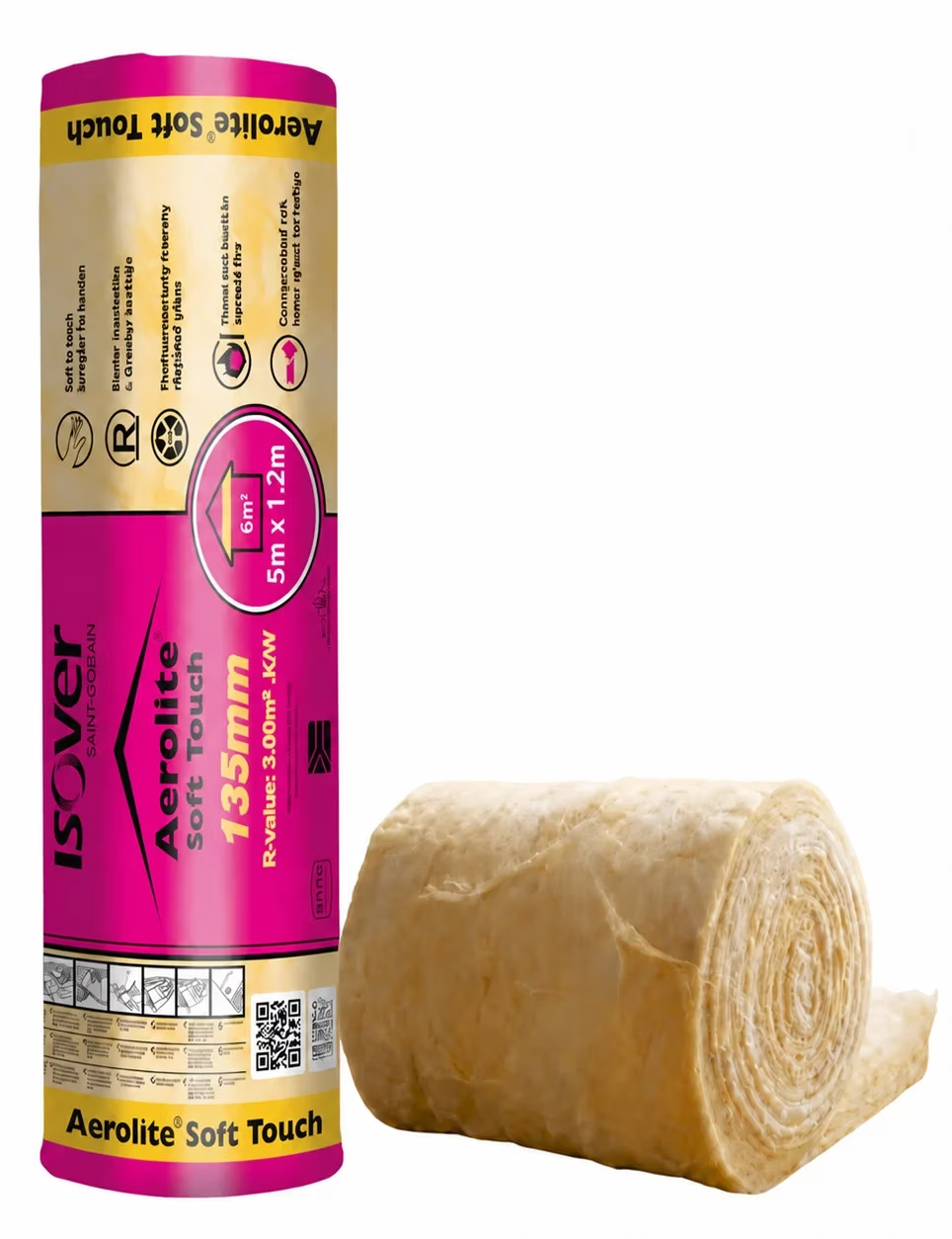
Aerolite is one of the most widely used ceiling insulation products in South Africa.
Benefits include:
Aerolite Ceiling Insulation Prices
Knauf insulation is a premium fibreglass insulation product with excellent acoustic and thermal properties.
Advantages include:
Knauf Ceiling Insulation Products
Isotherm insulation is made from recycled polyester fibres.
Benefits include:
Factorylite insulation is designed for industrial and residential applications.
Advantages include:
Factorylite Insulation Products
XPS ceiling boards combine insulation and ceiling finish in one product.
Advantages include:
Summit XPS Ceiling Installation
Installing ceiling insulation can significantly reduce household energy consumption.
Studies show that:
This means insulation often pays for itself within a few years.
South African building regulations require homes to meet certain energy efficiency standards.
Ceiling insulation plays an important role in meeting these requirements.
Key standards include:
Installing the correct insulation thickness helps ensure compliance with these standards.
Ceiling insulation can be installed:
Most existing homes in South Africa do not have adequate roof insulation, making insulation upgrades one of the best home improvements available.
Common signs include:
If your home experiences these issues, installing ceiling insulation can make a noticeable difference.
When choosing insulation, consider:
Different materials have different price ranges.
Thicker insulation provides better energy savings.
Some products are easier to install than others.
Roof design may affect which insulation type is best.
Although insulation has an upfront cost, it delivers long-term benefits.
Benefits include:
For most homeowners, ceiling insulation is one of the highest return-on-investment upgrades available.
Fibreglass insulation such as Aerolite or Knauf is usually the most affordable option.
How much does ceiling insulation cost per m²?
Typical prices range between R80 and R200 per square meter, depending on the insulation material and thickness.
Is ceiling insulation worth it?
Yes. Ceiling insulation can reduce energy consumption by up to 40%, making it one of the most effective ways to improve home energy efficiency.
Popular choices include:
Most insulation products last 20 to 50 years when properly installed.
If you are looking for high-quality ceiling insulation products at competitive prices, explore our full range of insulation materials.
We supply trusted insulation brands used across South Africa, including fibreglass, polyester, and thermal ceiling board systems.
|
Uploaded
Failed
|