R1,647.83–R2,987.00Price range: R1,647.83 through R2,987.00 excl. VAT
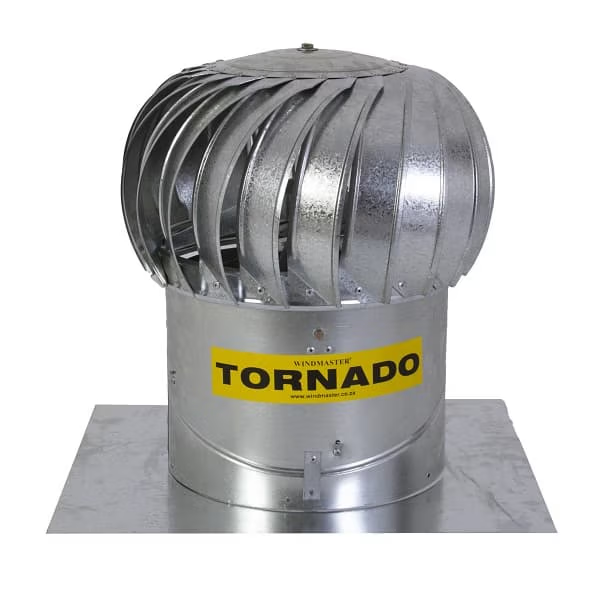
The Tornado Whirlybird Roof Ventilator is a wind-powered roof ventilation system designed to extract hot air and moisture from your roof space. It operates without electricity, reduces indoor heat build-up, protects roof structures from damp damage, and improves overall energy efficiency.
Ideal for homes, warehouses, factories, and commercial buildings.
NEED THIS INSULATION INSTALLED?
Professional installation available throughout Cape Town and surrounding areas through Cape Ceilings & Drywalling. Purchase your insulation from Roof Insulations and have our experienced team install it from R25–R35/m², depending on roof type and location.
Installation labour only. Rates typically range from R25–R35/m² depending on roof type, access, quantity and location. Insulation material is charged separately.
South African roofs take serious punishment. Long summers, high UV exposure, and stagnant air trapped in the roof cavity create extreme heat build-up. Without proper ventilation, roof temperatures can exceed 60°C.
The Tornado Whirlybird Roof Ventilators is designed to fix that problem properly — without electricity, without ongoing costs, and without complicated systems.
It uses wind energy to spin a turbine head that extracts hot air and moisture from the roof cavity, allowing cooler outside air to enter naturally. The result is a significantly cooler and drier roof space.
Roof Ventilators
Why Roof Ventilation Is Not Optional
Most buildings are insulated but poorly ventilated. Insulation slows heat transfer. Ventilation removes trapped heat entirely. They work together.
Without ventilation you get:
• Excessive roof heat build-up • Higher indoor temperatures • Increased air conditioning costs • Condensation and damp problems • Rusted roof sheets and fasteners • Mould growth in ceiling cavities
A Tornado Whirlybird prevents these problems by constantly extracting trapped air.
How the Tornado Whirlybird Works
Tornado Whirlybird Roof Ventilators
The unit consists of:
• Aluminium turbine head • Stainless steel shaft bearings • Flashing base for weatherproof installation • Wind-powered rotational system
When wind passes over the turbine head, it spins. This spinning action creates a low-pressure zone inside the unit which draws hot air upward and out of the roof cavity.
Even low wind speeds are enough to activate the ventilator.
No wiring. No switches. No power usage.
Whirlybird Roof Ventilators
Key Benefits of the Tornado Whirlybird
1. Reduces Roof Temperature
By extracting hot air, indoor temperatures can drop noticeably, especially in homes with metal roofing.
2. Lowers Energy Costs
Air conditioners and fans work less when the roof cavity is cooler.
3. Prevents Condensation
Moist air escapes before it can condense under roof sheeting.
4. Extends Roof Lifespan
Less trapped moisture means reduced corrosion and structural damage.
• Install near the highest point of the roof • Combine with sufficient air intake (eave vents or soffit ventilation) • Use multiple units for large roof spaces
A single unit typically services smaller residential areas, while warehouses require multiple installations.
Technical Specifications (General Overview)
• Material: Aluminium turbine head • Corrosion-resistant construction • Wind-powered operation • No electrical wiring required • Designed for South African weather conditions • Suitable for metal and tiled roofs
Whirlybird vs Electric Extractor Fans
Electric extractors:
• Require wiring • Add to electricity bills • Require maintenance • Stop during power outages
Tornado Whirlybirds:
• Operate naturally • Cost nothing to run • Continue working during load shedding • Have fewer mechanical components
In South Africa, load shedding alone makes wind-driven ventilation the sensible option.
How Many Whirlybirds Do You Need?
General rule of thumb:
• 1 unit for every 80–100m² (residential) • More units for high heat industrial applications